Sunday, November 30, 2014

An Angel Investor Retrospective


An Angel Investor Retrospective: My Brief History with the Sand Hill Angels


05/2015 Hall acquired by Atlasian


02/2015 Mentor for the UCB Center for Entrepreneurship Delta Prize


01/2015 Founder at Batchery.io


12/2014 Lead Investor on Series Seed and Convertible Note Holder on CrowdMics.com


12/2014 Venture Advisor, I-Gate, http://www.igateihub.org/about/


12/2014 Venture Madness, Festival Judge and Sponsor, http://www.venturemadness.com/


11/2014 UC Berkeley LAUNCH Festival Judge: http://launch.berkeley.edu/


11/2014 Carnegie Mellon West, Pitch Panelist, Integrated Innovation Institute, http://www.cmu.edu/integrated-innovation/


11/2014 Stanford Graduate School of Business, Mentor/Panelist, Angel and Venture Capital Financing for Entrepreneurs and Investors, http://explorecourses.stanford.edu/search?q=FINANCE%2B385&academicYear=20142015


10/2014 Born2Global, The Future of Korea, Korean Start-up Demo Day Silicon Valley, Speaker/Panelist, http://www.venturesquare.net/557111 & http://www.born2global.com/attatch_images/20141111/20141111141857.jpg


10/2014 Startup Weekend Tri-Valley Announces David Koehn as Keynote Speaker: http://goo.gl/PQTxtJ

10/2014 Open up to Advisor Role for select start-ups: rooT, Imperative, Lucolo, VenYoo, ErrandRunner, MoodMe


09/2014 Phoenix Funding Post Event with Panelist David Koehn, Investor Round Table: http://www.growsouthwest.com/phoenix-fundingpost-event-preview-with-panelist-david-koehn/

08/2014 Angel Didactic 1: Starting Up in Angel Investing: http://vimeo.com/103479873

08/2014 Angel Didactic 2: One Approach to the Process of Angel Investing: http://vimeo.com/103479872


08/2014 Angel Didactic 3: Defining and Investment Thesis: http://vimeo.com/103761905


08/2014 Angel Didactic 4: Bring the Deal into Sand Hill Angels: http://vimeo.com/103761907


08/2014Angel Didactic 5: Understanding The Sand Hill Angels Screening Process: http://vimeo.com/103761906

08/2014 Angel Didactic 6: Deal Preparation for the Sand Hill Angels Dinner Meeting: http://vimeo.com/103856797

08/2014 Angel Didactic 7: The Investment Pitch and Closing the Deal: http://vimeo.com/103856798

08/2014 Angel Didactic 8: Closing the Deal Q&A: http://vimeo.com/103856799

05/2014 Clean Power Finance Announces Commitment From Credit Suisse To Fund Residential Solar Systems; Brings Total Project Financing Investments Raised by CPF to More than One Billion Dollars: http://www.cleanpowerfinance.com/about-us/media-center/press-release/clean-power-finance-announces-commitment-credit-suisse-fund-residential-solar-systems/

05/2014 Tepper School Alumni Entrepreneurship Demo Day and Reception:


04/2014 F50 Angel Investing Forum April 2014: http://www.meetup.com/sventrepreneurs/events/175726642/

02/2014, With Tim Draper at Silicon Valley VC, Angel and Crowdfunding Conference, www.TheSohoLoft.com,

2013; 2014 Plug-N-Play Summer Expo VIP Judge

11/2013 Perkville Funded by Sand Hill Angels In Bridge to Series A &; Raises Seed Round from Leading Angel Investors:

10/2013 Gobstopper (Now Curriculet) Raises $1.8M Seed Round

08/2013 Angel Didactic 1: Sourcing and Vetting: http://vimeo.com/69960884

08/2013 Angel Didactic 2: Grooming the Deal to get through Pre-Screen:  http://vimeo.com/69960885

08/2013 Angel Didactic 3: Preparation for Surviving the Screening Meeting: http://vimeo.com/69963134

08/2013 Angel Didactic 4: Pitching the Membership at the Investor Dinner Meeting: http://vimeo.com/69960889

08/2013: Angel Didactic 5: Making the Capital Call and Closing the Deal: http://vimeo.com/69960890

07/2013: Hall Raises 5.5 Million Series A: https://hall.com/blog/hall-raises-5-5m-series-a

07/2013: Flywheel Raises 13.8 Million Dollar Series B: http://pevc.dowjones.com/Article?an=DJFVW00020130731e97vayzn8

06/2013 Data Scientist As A Service? Spinnakr Raises ~$1 Million From Andreessen Horowitz, 500 Startups and Sand Hill Angels For Smarter Web Analytics: 
* http://techcrunch.com/2013/06/10/data-scientist-as-a-service-spinnakr-raises-1-million-from-andreessen-horowitz-500-startups-others-for-smarter-web-analytics/


01/2013 Sand Hill Angels invested $2.7M with 15 new companies in 2012: http://www.bizjournals.com/sanjose/news/2013/01/31/sand-hill-angels-invested-27m-with.html


12/2012: Sand Hill Angels Announces Record 2012 Results, 2013 Focus on Syndication, Portfolio Company Support http://finance.yahoo.com/news/sand-hill-angels-announces-record-130000368.html


05/2012 - CINA Entrepreneur Thought Leader Mentor - 05-29-12: 
* https://www.flickr.com/photos/15706607@N08/7421290774/

2012, 2013, 2014: "Angel Elevator Pitch": VC Taskforce: http://vctaskforce.com/

09/2011 Google Invests $75 Million in Home Solar Venture (Clean Power Finance backed by Sand Hill Angels) http://online.wsj.com/news/articles/SB10001424052970204831304576596833595375002

08/2010 Startup Weekend San Francisco #SWSF Keynote with Myself and Eric Ries:

Tuesday, September 16, 2014

A Product Leadership Retrospective

A Quick Product Leadership Retrospective

Starting early in my career I have always gravitated toward developing new initiatives from early ideation through to productization. Innovation and the start-up ecosystem runs in my DNA, for better or for worse:

I've had some time to hang out this summer and took a few minutes to reflect on my product mangement history. I've skipped a few products here and there. I also kept a few examples of great products that didn't win out in the marketplace -- but many of them did succeed and are still proving of value...

Webster at Aurigin Software

My first taste of this was at Aurigin software, an analytics business focused on the visualization of intellectual property assets and citation analysis in particular. At Aurigin we built some extremely cool viz and analysis tools, none more cool than a project we nicknamed "Webster".

Here is the Patent: http://www.google.com/patents/US6877137

Mobile at AvantGo

At AvantGo I spearheaded a Mobile Learning initiative as documented in Wireless Inc.: http://greatamericanstartup.blogspot.com/2011/02/excerpt-from-wireless-inc-by-craig.html

FieldSpace at TailWind

At TailWind: http://jungpeter.com/tailwind/index.html

We focused on mobile security and tracking.

The patent application:
http://www.patents.com/us-20060010096.html
Served: Pfizer, Army, Navy

Webley for Parus Interactive Inc.:

Re-focused brand, market and product. Transitioning from http://www.parusinteractive.com/ to http://webley.com.

My eLife for My Vision One Inc.

A now defunct Tony Robbins project.

http://www.youtube.com/watch?v=_L7Yi-pkvJw&

http://www.youtube.com/watch?v=DPOdObKK0jo&feature=endscreen&NR=1

Net Promoter for Satmetrix:

Piloted Version 1 of the Certification Product in London, 2007

http://www.netpromoter.com/training/index.jsp

Facebook Challenge App from Zazengo

http://www.slideshare.net/zazengo/zazengo-create-your-own-challenge-on-facebook?next_slideshow=1

Morfmobile Mobile Site Generator

http://mitch.carbonmade.com/projects/2095025#1

http://venturebeat.com/2008/06/19/latest-mobilebeat-nominations-nim-rnw-waterfall-mobile-youmail-v-enable-buzzd-appvoyage-jibe-morf/

Re-focused business on serving businesses rather than consumers:
http://www.pr6.com/morf.html

BeyondThePod | The DropSpot | Venjuvo

VenJuvo offered exchanges of pre-owned items for credits that could be used to purchase other pre-owned items through their service involving websites venjuvo.com, Kmart.Trade4Credit.com and Sears.Trade4Credit.com. Ahead of the curve ealier version of Gazelle.com.

http://www.cnet.com/news/gadget-trade-in-services-that-pay-off/

Saba Social Learning at Saba

A wide range of posts:
http://www.saba.com/us/search/?q=koehn

A wide range of videos:
http://greatamericanstartup.blogspot.com/2011/08/saba-related-blog-posts-index.html

Relaunch of Learn.com as Oracle Learn Cloud:

Big splashes in the first 6-9 months:

http://www.oracle.com/us/corporate/press/1922260

http://www.oracle.com/us/corporate/press/2020966

http://www.oracle.com/us/corporate/press/2132580

http://www.oracle.com/us/corporate/press/2005750

http://markets.financialcontent.com/stocks/news/read?GUID=23737101

A broad index of coverage:

http://greatamericanstartup.blogspot.com/2014/08/oracle-related-posts-index.html

Thursday, August 07, 2014

Oracle Related Posts: An Index


Oracle Related Posts: An Index

https://www.youtube.com/watch?v=LUf9LDC8kuY

Modern HR in the Cloud
https://blogs.oracle.com/OracleHCM/entry/oracle_learn_cloud_drives_business


https://oracleus.activeevents.com/2013/connect/speakerDetail.ww?PERSON_ID=F502E6C92056BF9BB2A44C0710496D00&tclass=popup

*  Meet the Experts: Oracle Taleo Business Edition Cloud Service
https://oracleus.activeevents.com/2013/connect/sessionDetail.ww?SESSION_ID=9129&tclass=popup

https://oracleus.activeevents.com/2013/connect/sessionDetail.ww?SESSION_ID=9104&tclass=popup

OHUG
https://oracleus.activeevents.com/2013/connect/sessionDetail.ww?SESSION_ID=9104&tclass=popup
&
https://twitter.com/jobsitnik/status/344521173083766784


Wednesday, May 30, 2012

Angel Mind

I presented at a CINA event last night focused on helping entrepreneurs understand how to start their start-ups. In my presentation I wanted to provide a snapshot in time of how a typical angel might find, process, evaluate, and invest in their deals. To do this I crunched all my data around my current deal flow and recent investments and created tag clouds in Wordle based on the data and the weighting of that data. The result was this presentation in Prezi called Angel Mind. While the shelf life of the accuracy of the Prezi presentation is short...the audience found it useful and entertaining.

ANGEL MIND


Friday, August 12, 2011

Saba Related Blog Posts: An Index

A Llst of Saba Related Efforts:

Using Social Learning to Create Top Sales Performers:

http://www.saba.com/blogs/2011/08/18/using-social-learning-to-create-top-sales-performers/

The Saba People Cloud Transformative Workplace: Social Learning & Mobile [Video]:

http://www.tmcnet.com/tmc/videos/default.aspx?vid=4946

Chief Learning Officer Highlights Saba’s Gold Award Winning LMS:

http://www.saba.com/blogs/2011/06/06/chief-learning-officer-highlights-sabas-gold-award-winning-lms/

Clients of Saba Learning Win the Day at CLO Symposium with 25% of client awards:

http://www.saba.com/blogs/2010/10/25/clients-of-saba-learning-win-the-day-at-clo-symposium-with-25-of-client-awards/

* Enabling the Always On, Always Available Enterprise with Saba Mobile:

http://www.saba.com/blogs/2011/08/11/enabling-the-always-on-always-available-enterprise-with-saba-mobile/

Kicking Off Our Saba Social Learning Beta Program:

http://www.saba.com/blogs/2011/05/18/kicking-off-our-saba-social-learning-beta-program/

* The Value of In-Context Learning:

Saturday, June 11, 2011

Building on Strengths Rather than Focusing on Weakness

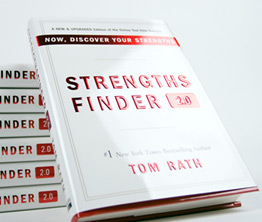
I recently took the www.strengthsfinder.com online assessment. The assessment was associated with the Strengths Finder 2.0 book.  The system presented by the book gave me a lexicon to name my strengths. By giving my strengths names I can see them as tools rather than as amorphous capabilities that I innately exercise.

The easiest way for me to think about my strengths is that they are behaviors I do without hesitation, naturally, everyday, with near-perfect execution. The Strengths Finder model asserts that all people have such strengths.

By understanding what my strengths are I can refelect on when it is best to use one or another of my strengths with intention. Purposeful exercise of personal strengths is a personal goal of mine--I don't think the strengths finder model necessarily prescribes such mindfulness.

The quick version of the history is as follows:

"Based on a 40-year study of human strengths, Gallup created a language of the 34 most common talents and developed the Clifton StrengthsFinder assessment to help people discover and describe these talents. "


My next step was to review the report provide by the assessment and seek out a coach who could guide me in applying the results of the assessment. I learned my combination of strengths is a 1 in 33 million result. There are probably more common combinations as there are probably more rare combinations.


In the assessment my top 5 strengths in order from 1-5 are as follows:
  1. Strategic 
  2. Futuristic 
  3. Self-Assurance 
  4. Ideation 
  5. Activator 

In the end, what I like most about the process is that the very obvious premise is deeply appealing. Why try and improve people's weaknesses rather than improve their strengths? Isn't every moment spent investing in a person's strengths a greater return on outcome for them than the hard slog to make gains in an area out of tune with the individual?

With my coworkers, with my family, my strengths or theirs--aren't these worth spending more time on than weaknesses?

Tuesday, February 22, 2011

An excerpt from Wireless, Inc. by Craig Settles c2002... a retro mlearning snippet


Below is an excerpt from Wireless, Inc. by Craig Settles c2002. A decade ago Craig was documenting what we were doing in the mLearning space. What is interesting to me is that while the technology has changed the principles, for the most part, have not.

Note the mention of the “iPaq” and things like “dynamic syndication server” – archaic right?

Also note the applications of mobile learning as appropriate for "sales" and other field services. Also as part of “continuing education" and mobile learners accessing the “collective experience of others.”

Some of the technology references and context may be a decade old, but the problem space remains today much as it was characterized a decade ago.

“Internal Education Tactics

Education of the troops is an ongoing process that happens at many levels. When a person begins employment, they have to learn about the organization’s policies, procedures, key people in the organizational chart, employee benefits, and so on. Then they have to learn procedures and other information specific to their respective departments. This may include learning how to use office equipment, plant machinery, etc.

Once employees complete their “entry-level” learning, they require ongoing education to keep abreast of new developments within their industry, market, and profession, as well as new projects and activities within their organizations. Also a part of continuing education is the type of learning that comes from tapping into the collective experience of others within the department or organization.                     

There is often general information that people only access occasionally, such as policies and procedures manuals, directions for completing travel and medical expense reimbursement forms, or lists of the retailers carrying your products. Since mobile workers don’t need to get to these materials all the time, it may be all right to just provide simple access to an intranet with the materials via their wireless devices.

For information and skills that are critical for employees to do their jobs, such as customer support procedures, or product assembly processes, spend time with your mobile workers to carefully plan both what content to make accessible and how to deliver it. If you provide extensive conventional training of mobile workers or inter-facility roamers before they are sent into the field, then your wireless content might include refresher materials that serve to reinforce what workers learn. But, if you hire people one day and put them on the road or into plant vehicles the next day, you might want to consider creating a full-featured training program that you can deliver wirelessly.                                                               

Of course, you may have decided when you were evaluating the fourth strategic dimension that you want to use wireless to reduce the cost of training. In that case, you should do a review of all of your training programs to determine the particular tactics you will use.
                                                                                   
David Koehn, AvantGo’s director of educational services, helps customers develop extensive wireless-enabled training courses. He also managed the development of a course that AvantGo staff use to train third-party developers who write applications using the company’s technology. (It’s always reassuring to know that vendors use their own technology).                                                                                                  

Koehn made several good recommendations that can contribute to the success of your efforts, whether you plan to create traditional training courses, or you are developing content to facilitate the distribution of policies, procedures, and general information.

Effective Design and Deployment Mean a Lot

Here are some of Koehn’s recommendations:  

·         Mobile learning is a blend of a product (a knowledge application) and a service (knowledge transfer). Because of this blend, m-learning needs conception, graphic and/or layout design, application development, and deployment planning. Whenever possible, use those with mobile expertise to manage your mobile learning implementation.

·         Use whatever you can from existing courses or materials. Don’t forget the m-learning mode is an extension of existing learning systems, whether online courses accessed on PCs or instructor-led classes, and not a separate pool of information. Use whatever you can from existing web materials such as page design, navigation, and search features, but modify these for the mobile user. The search feature is especially useful for reference materials like a Peterson Guide, though your material may not be that extensive.

·         Make your mobile courseware cross-platform so it works on all types of devices. Students may want courseware on their iPAQ one day and on their RIM BlackBerry the next.

·         Give a lot of thought to the design choices that you make. For example, decide if you are going to provide images for high-end mobile devices that you hope will work on low-end devices, or if you are going to use images that work well on low-end devices, but don’t use all of the capacity of the high-end device. Because the people receiving training may be using devices with different graphics capabilities, there will always be trade-offs on what looks good, what is needed, and what is practical. You have to find the right balance without sacrificing the main objective, which is to deliver effective training.

·         Stick to HTML and JavaScript for creating your courseware. This will make it easy to develop, easy to deploy, and easier all around for the people who have to use it. Your courseware should be interactive on mobile devices, even when the users aren’t wirelessly connected.

·         Publish the lessons from a dynamic syndication server rather than manually writing all of the pages. This is a publishing tool that allows you to create training modules in a SCORM-compliant (standardized) format and publish them to the Web in an automated way that does not require hours and hours of hand-coding.

·         As users input data into a particular course or interact with a trainer, be sure they can reconcile the data between their desktops and mobile devices using the devices’ sync feature, web surfing, or having it pushed from your servers. Students do not want the progress of training on the handheld version of their course to differ from that of their desktop course.

·         Make certain your m-learning course creates value. And, in turn, make certain you look to charge an employee’s department for an m-learning  product, even thought the application is for internal use. People will take these more seriously if there is a price tag attached, even if the money is primarily a paper transaction between departments.

·         Always be aware of the context in which people will use your courseware. Mobile learning is a “point of activity” application, meaning people likely will be doing whatever the course material is trying to teach them while they are taking the course. If users will be outside when learning or reviewing materials on horse breeding, it may not be a good idea to use fonts and font sizes that are hard to read on PDA screens in outdoor lighting. You also want to use a lot of diagrams because users won’t have a lot of time for reading when they’re working with a couple of frisky equines.

·         The situation and conditions under which people will use the courseware should also determine your hardware selection. Brad, a friend of mine who drives heavy construction equipment, is shopping for a PDA. He’s very conscious of the hardware design because the sand, dirt, and moisture in the areas where he works can ruin the internal components if the outer casing is flimsy or allows particles to slip in.

·         Don’t use fill-in-the-blank text fields. Use select lists and drop-down answer menus or buttons so a pen tap or a click can make the lesson interactive. Someone who’s brushing up on a couple of product features while sitting in the customer’s lobby before a repair visit doesn’t have a lot of time to etch long essays.

·         Your courseware should have occasional “e-mail for help” and “phone for help” features. This is especially valuable if people will be in locations where access to online help may not be available.

·         Create pages that require as little up and down scrolling as possible. Never expect students to scroll left and right.

When you finish developing your courseware, make sure that everyone who will use it gets hands-on experience guided by an instructor during the class or at some time before they go into the field. This is to ensure people use the application. If you just hand people a PDA and send them on their way, or let them download the application on their own, it’s likely that people won’t use the courseware.

Remember that m-learning, the same as in many other uses of mobile devices, often changes the behavior of the people using it in the organization and thus affects the behavior of the organization itself. If employees are learning on mobile devices, try to determine how this will impact instructors and managers, since the technology can increase the pace at which people learn, the type of questions that they ask, or even the way they perform their duties. These may all be positive changes, but to maximize the value of this new way of doing business you can’t have these people caught off guard.

When Does It Make Sense to Use m-Learning?

You can use these guidelines to develop mobile courseware that teach people to do all sorts of things including teaching people how to assemble, use, maintain, and/or repair equipment, depending on the person’s actual job. You may have employees hired to specifically do these things, but your mobile workers might be able to fix some things that break faster than it will take for support staff to arrive.                            

You may also need to train people how to use software applications, complete complex business operations that occur in the field (i.e., processing customer’s loan or insurance forms), or promote key features and benefits of your products. Mobile learning can be effective if your organization markets services or products from several companies and it’s hard to remember all the details about each one, or for your resellers and sales reps who also carry your competitors’ products.
                                                                         
Wireless training programs also make sense for mobile workers who have to keep track of a broad range of procedures and processes, such as doctors, lawyers, and financial services professionals. It’s not so much that you want these people to be learning on the job, but there are times when someone needs a quick refresher course for procedures they haven’t done in a while.                                                    

Some organizations have six-figure (or more) budgets to create “knowledge bases” on servers to store details on best practices, selling tactics for large accounts, documents that are designed for certain proposals, or negotiations. Your mobile workers may not need training programs for these, but they probably can benefit by having wireless access to this intellectual capital.                                                                             

As a closing thought, I recommend that you explore ways to use your training and other employee education tactics for your external audiences as well. The design and implementation expertise you learn from these applications for your employees can be applied to training for customers, possibly without a lot of modifications. Subsequently your investment will produce greater returns. And conversely, some of your tactics for educating external audiences will work for employees as well. In fact, self-help and professional development may produce more immediate financial returns among employees than customers and prospects."

--finis--